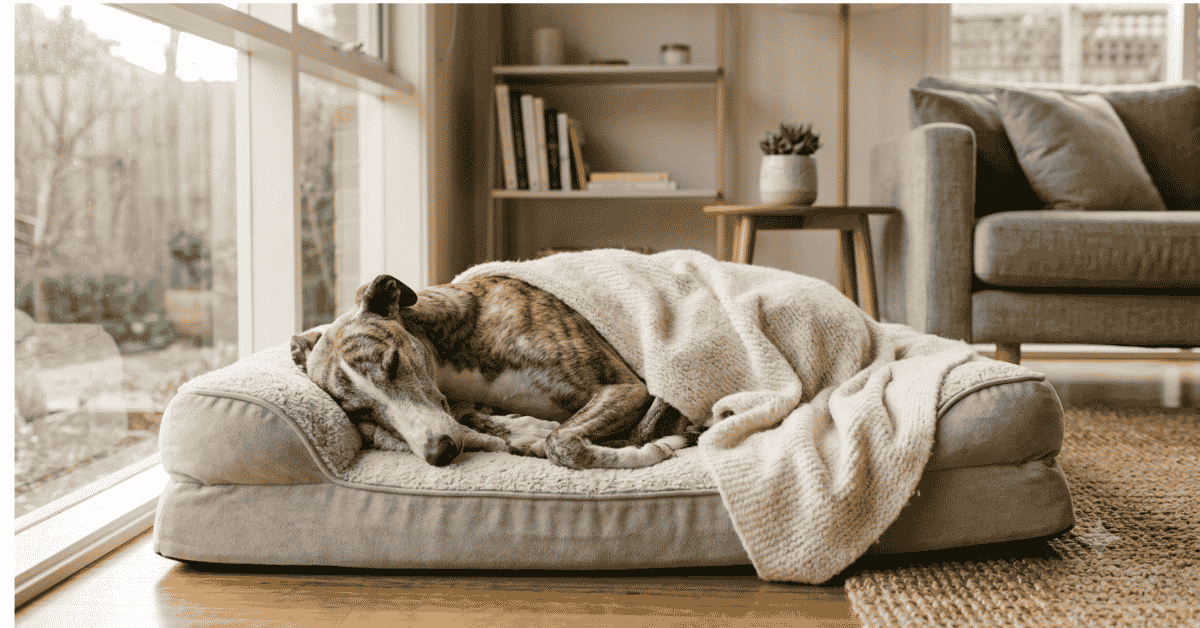
Sleek, deep-chested, and long-legged, greyhounds are known internationally as the fastest of all dogs. However, explosive athletic speed is far from the whole story of this ancient sighthound. These days, Greyhounds are much more commonly associated with being quiet indoor companions than track athletes.
It is vital to analyze their nature, care needs, and home lifestyle requirements before bringing them into your residence. Determining whether or not the Greyhound is a good fit for you involves looking a little closer at the realities of what day-to-day life with these gentle giants looks like.
Greyhound Temperament & Personality Traits
Just about every new owner is shocked at how calm Greyhounds are indoors – despite their reputation as elite sprinters:
The ’45-mph Couch Potato’
Don’t be fooled by their athletic shape—Greyhounds are also known as the lazy dogs inside the house. After they burn off a little energy, they are happy to curl up on a soft dog bed (or your couch) and sleep 18 hours per day.
A Gentle & Soft-Spoken Attitude
Greyhounds are tender and docile dogs who form attachments with their human families. They are usually quite calm, obedient to visitors to your home, and do quite well in low-desire households.
Low Bark Rate and Quiet House Manners
Greyhounds rarely bark compared to many active breeds. They’re poor watchdogs, but their quiet nature makes them great companions in shared-wall living situations.
Physical, Space, and Daily Routine Requirements
Clarifying what makes up a sighthound’s exercise profile eliminates misconceptions regarding what they need on any given day:
Burst Energy Performance vs. Endurance
Greyhounds are sprinters, not marathon runners. They usually require nothing more than two 20 to 30 minute walks daily, combined with a brief sprint in an enclosed area.
High Prey Drive & But Not Fulfilled
Even your relatively laid-back sighthound is constantly scanning, and once it locks onto a small animal-squirrel, rabbit, outdoor cat-put away the leash unless you want to chase. They should never, ever be walked off-leash in unfenced areas because they can be out of sight within seconds due to their speed.
Fenced Yard
(If you have at least 1 hour of off-leash play time free every day, this is vital to preventing a Greyhound from jumping after small prey if your yard does not have an adequate enclosure, as well as ensuring your fully fenced garden is high enough up to 5- or 6-feet tall).
Maintenance, Hygiene, and Additional Care Requirements
While Greyhounds are healthy, their unique anatomy means that day-to-day care has to be slightly modified:
Minimal Grooming required
-They have a single, short coat that is low in shedding and only moderately odorous. But they do not have an undercoat and their body fat percentage is close to zero, so they are extremely susceptible to weather — needing sweaters or coats in the winter months and shade in hot summer months.
Slim Physique & Fragile Construct
With lean physique and skinny skin, they’re vulnerable to minor nicks, scratches, and postsynovial accidents from roughhousing or outside brambles. Orthopedic dog beds are also required so their joints do not bear too much strain from hard floors.
Veterinary Considerations Specific to Sighthounds
The physiology of sighthounds differs in specific ways that need to be considered during veterinary workup (such as higher red blood cell counts and lower thyroid levels compared with other dog breeds). They are also sensitive to some anesthesia drugs and prone to bloat (GDV) because of the deep chests.
Rescue RR vs Puppy
When you bring your Greyhound home, the experience can vary based on whether you choose a puppy or one who has recently retired from racing.
| Consideration | Retired Racing Greyhound | Greyhound Puppy |
|---|---|---|
| Availability | Wide distribution through dedicated rescue organizations. | Heritage Breed: Very rare; shall be a work with preservation breeders. |
| Home Prep | The dog is already crate-trained and leash acclimated but still needs time with stairs, glass sliding doors & home appliances. | Energetic; needs conventional home-training, simple obedience, and also substantial socialization. |
| Temperament | Fully developed, predictable adult personality. | Active and fun-loving, maturing into those adult characteristics over time. |
Is a Greyhound Dog for Your Lifestyle? (Pros & Cons)
To see if the Greyhound is correct for you, find out how their characteristics align with your day-to-day schedule:
Ideal Match For:
- Suitable for: Apartment or condo dwellers with a need for a quiet, low-barking companion.
- Ideal environment: Calm home with professional adults working from home or retirees looking for a gentle companion.
- Owners who want a beautiful dog with simple grooming basics.
Reconsider If:
- Your outdoors-free-roaming cats, or small off-leash pets (with the exception of the actual dog if it is completely cat-tested).
- Your ideal companion for off-leash hikes or running in the trail.
- You want a guardian dog or watchdog.
Bottom Line: What is Your Decision
Choosing whether the Greyhound is the dog for you is a trade-off between their need to stay on-leash and warm winter clothes vs. their gentle, obedient presence in your household. They are a perfect match for your home if you want a gentle, calm, and loving companion that loves to lounge by your side- Greyhounds.

Passionate WordPress blogger sharing clear, helpful guides, simple tips, and practical ideas to help readers learn, grow, and succeed online.