Introduction
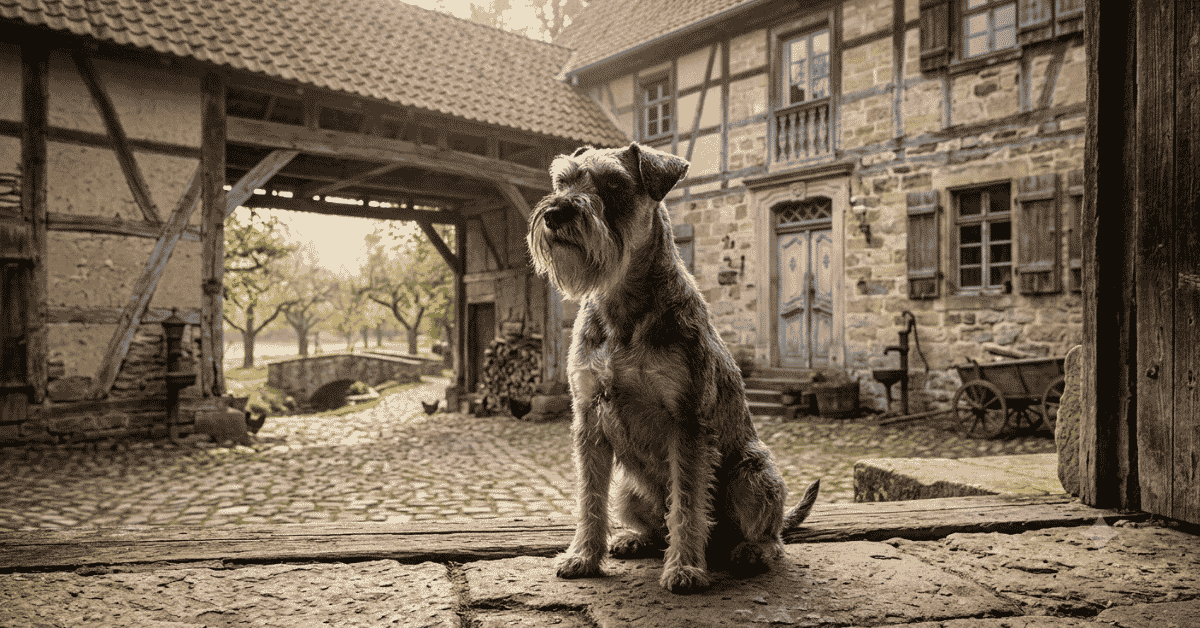
You would have to stretch the term “beard” quite a bit, but no dog is more instantly recognizable both for its expressive bushy brows and distinctive bristle-brushed facial hair, than the Miniature Schnauzer with its squat, squarely built frame. They now rank among the world’s most popular dog breeds, as lovable hypoallergenic family members and keen competitors in the conformation show ring. Though not originally bred to be the kings and queens of indoor lounging. The Miniature Schnauzer was bred to work – an industrious and utilitarian dog harking back to the agricultural needs of 19th-century Germany.
The Combination of Deep Ancestral Roots and Crossbreeding Foundations
From the farm-laden provinces of Bavaria and Württemberg in southwestern Germany springs the tale of this cherished breed.
In the mid-to-late 19th century, local farmers would depend on the Standard Schnauzer (Mittelschnauzer) to protect both property and livestock. The Medium Standard was working quite well at his job, but farmers began to realize they needed something more compact—a smaller, nimbler dog who could slip through tight places under farm machinery and into the farthest corners of granaries.
Breeders started to systematically breed down the height of the dog while retaining its coarse, robust working drive through interbreeding with local small breeds such as a variety of Pinschers. To bolster the gene pool, animal breeders incorporated the small, mouthy wire-haired Pinscher down the line, as well as Toy Poodles.
The Affenpinscher solidified the rough, wiry coat while the Poodle brought in characteristics for a smaller dog and low-shedding coat. Most critically, early selectors were solely concerned with producing a strong, square frame and bold, stable temperament, deliberately avoiding the production of a dainty toy novelty.
Traditional Roles and Functional Capabilities
At the standard German homestead, every animal had to pull its own weight, and the new miniature breed soon paid off big.
The Peerless Farm Ratter
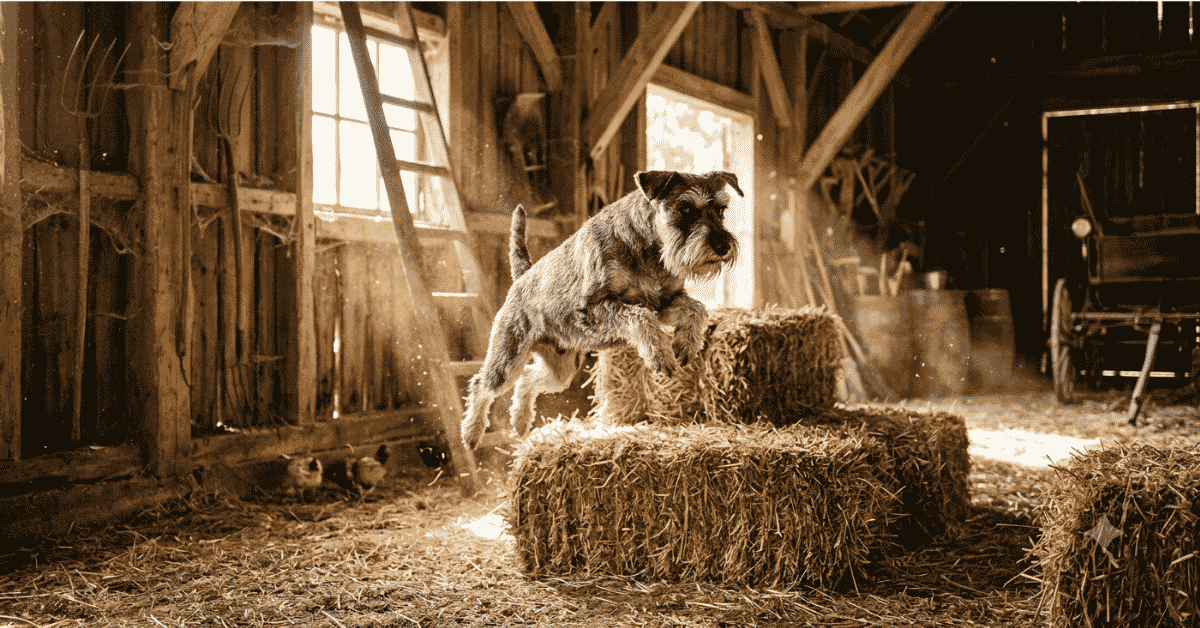
The biological purpose for which the breed was intended is vermin control. Rats, mice, and weasels were a perpetual menace to stores of agricultural grain, spread disease, and preyed on young poultry. With a potent combination of explosive speed, relentless focus, and never an ounce of fear in their hearts, these little dogs rounded barns and stables tirelessly, controlling the population of destructive rodents full stop.
Vigilant Sentry Work

Too small by themselves to effectively repel large human intruders or other apex predators, they made an unbeatable security team together with the larger farm dogs. With an extremely alert temperament and sharp hearing, they were used as natural guards, barking a loud and immediate alarm call to awaken the household during any unusual event.
Transition to Household Living
By the time of the industrial age, however, a dog’s perfect combination of traits made it a prime candidate for life indoors. Their small stature made them easy to handle in small areas, their minimized shedding was a major plus for cleanliness, and their instinctual urge to bond with humans enabled them to easily flow from grime-covered barns into cozy family rooms.
Early Documentation and Breed Stabilization
When the breed formed into a distinct type, it attracted the notice of early European dog registries, shifting the history of the Miniature Schnauzer from oral legend to written record.
The first records of an institution date back to 1888 when the stud-record book was registered with a dark black female named Findel. In history, she is the very first recorded wire-haired miniature pinscher/schnauzer.
Ten years later, the breed was granted a competitive classification at the Stuttgart Exhibition of 1899, and on behalf of a stable phenotype it made its first appearance before the rest of Europe.
Progress received further impetus in 1895 with the formation of the Pinscher-Schnauzer-Klub. It was this kennel that defined the official breed type, parted the wire-haired schnauzers from smooth-coated pinschers, and laid down a gradual structure for preserving the functioning position of these breeds in future times.
Modern Milestones and International Recognition
After establishing themselves in Europe, these little dogs pressed westward across the Atlantic at a quick pace and changed the history of the Miniature Schnauzer.
It was during the 1920s that breeding stock were first imported into North America. At the same time, American breeders and pet owners almost immediately became enamored with their high intelligence and comical personalities. Following its entry into the New World, to safeguard the breed’s credentials, a formal American Miniature Schnauzer Club (AMSC) was founded in 1933.
International Recognition
| Organization | Group Classification | Unique Historical Fact |
|---|---|---|
| American Kennel Club (AKC) | Terrier Group | Completely free of British Isles ancestry; the only breed in the AKC Terrier Group. |
| The Royal Kennel Club (UK) | Utility Group | Placement with other highly specialized working and companion breeds. |
| FCI (International) | Pinscher and Schnauzer Type | Lumped outright with bigger, ancestral working cousins. |
Conclusion

The breed continues to be one of the top choices worldwide today. Modern owners’ appreciation of the Miniature Schnauzer’s gentle personality and show-honored good looks is an idiosyncrasy that, viewed in a historical frame, can be more fully understood: under that virtuous coat and dignified beard resides the heart of a feisty, workaday little German farm dog.

Passionate WordPress blogger sharing clear, helpful guides, simple tips, and practical ideas to help readers learn, grow, and succeed online.