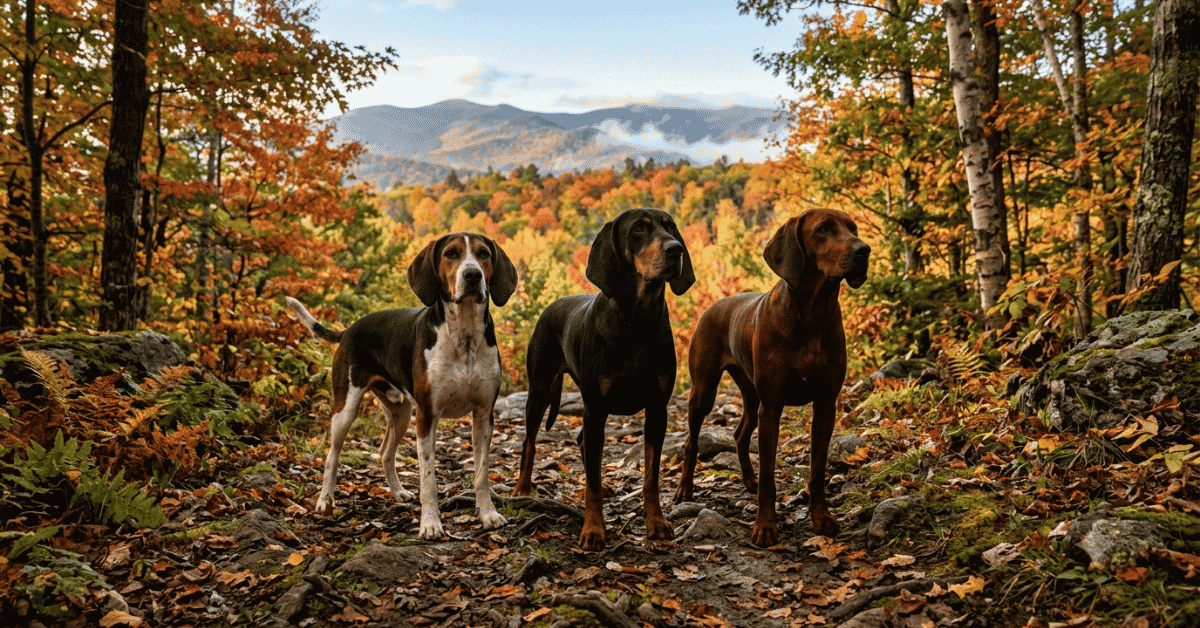
Enter the native hunting dog breeds of North America, one of the only canine groups with a long history, incredible endurance, and genuine working ability. Spend some quality time with the Coonhound breeds—aka the fantastic four types of scent hounds built for stamina, known for their super noses, and cherished as calm indoor companions.
Introduction to Coonhound Breeds
American Hunting Heritage
While open-country fox hunts bred many European hounds, Coonhounds were designed for tracking the animal down in breathtaking woodland channels, swamps, and mountains. Selective breeding amongst settlers of imported English Foxhounds and Bloodhounds, as well as local strains, produced dogs specially suited to the rugged wilderness.
Core Function and Working Style
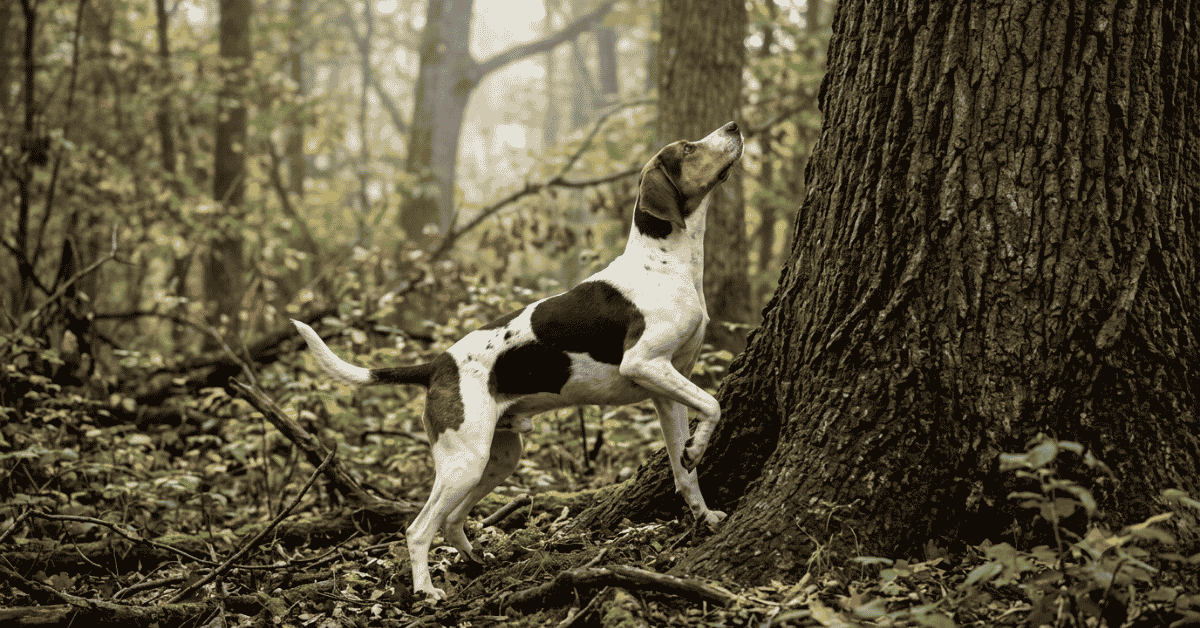
Coonhounds are bred with a nose for following what is known as a cold trail—this means they can sniff out an old or faint scent left behind by creatures of the night like raccoons, bobcats, or cougars that have lived near your area hours ago. Once he finds a trail, the hound follows it until the animal itself goes up a tree. The dog then goes into a different position called treeing: they are standing at the base of the tree and barking aarp like crazy to let their owner know where they are.
Profile of Recognized Coonhound Breeds
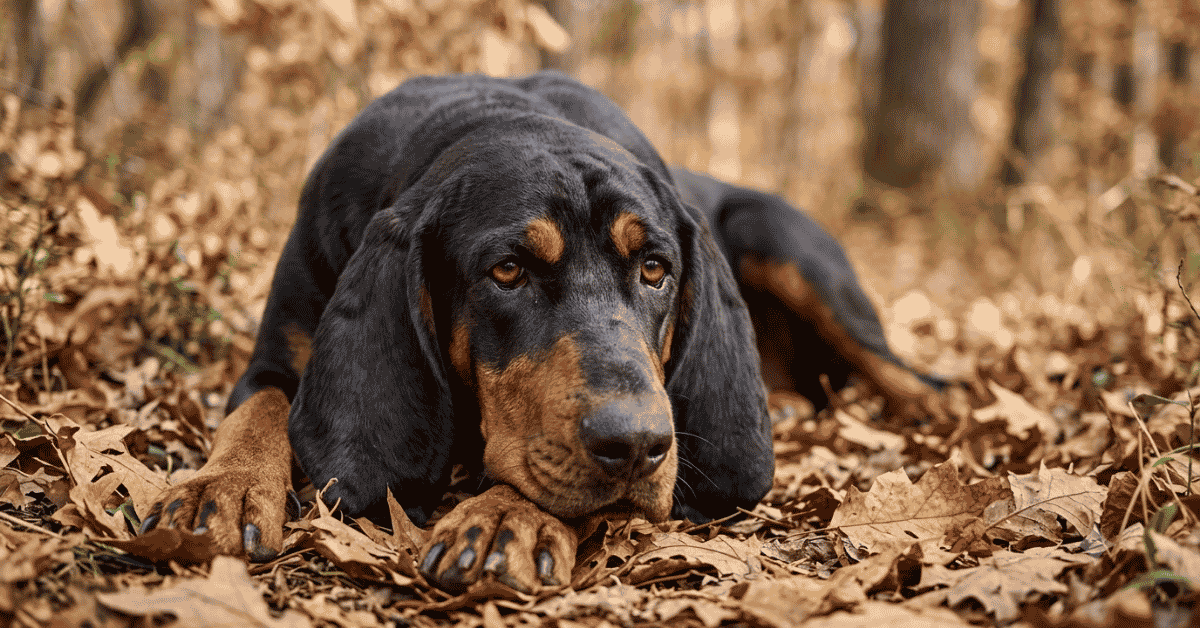
- Black and Tan Coonhound: The Black and Tan is a strong, heavily built dog, as it has the distinction of being the first Coonhound breed recognized by major kennel clubs. Identified by its elegant, black coat with mahogany patches on the ears and legs, this breed is directly descended from the Bloodhound and early Virginia Foxhounds, making it a great scent hound with an unmistakable set of long, floppy ears.
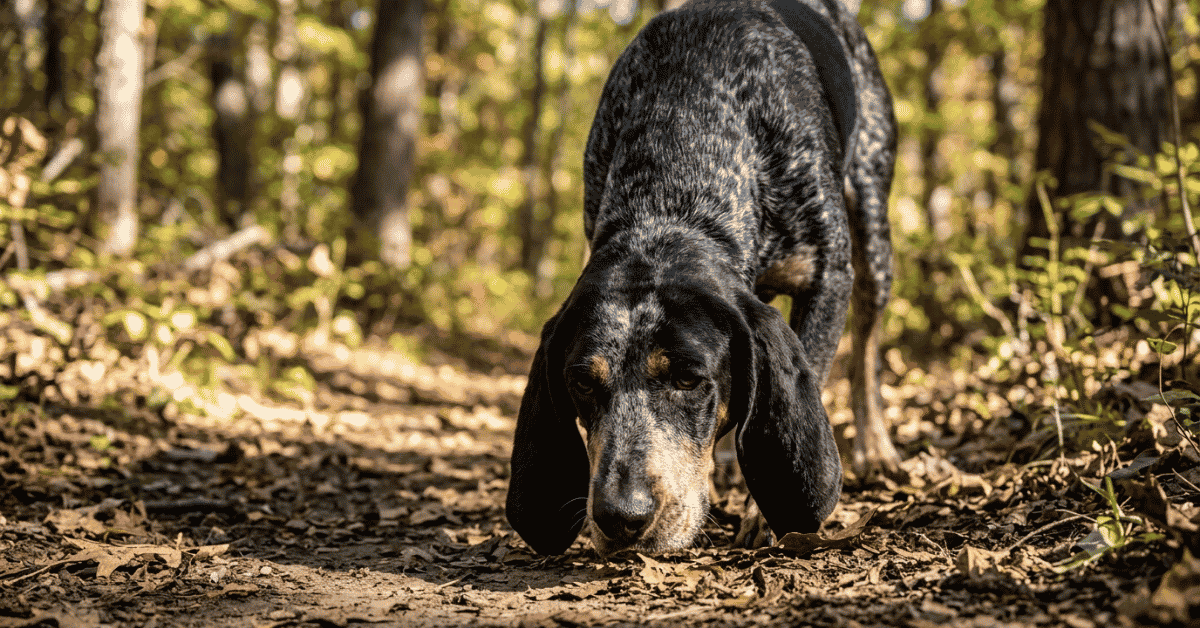
- Bluetick Coonhound: Known for a gorgeous dark blue, heavily mottled coat, the Bluetick is tough as steel and works until he drops. A breed with a cold nose and deep, resonant bawl voice that approaches tracking like its job was on the line.
- Redbone Coonhound: On the other hand, it is a striking dog with its mahogany-red coat and athletic structure. Established in the South of the United States, Redbones are loved for their speed, maneuverability across treacherous swamp areas, and cuddly personality.
- Treeing Walker Coonhound: The Treeing Walker is known to be the “Formula 1” of the Coonhound family, a very fast, driven, and competitive breed. This breed shows off a typical tri-color robe like a large, long-legged Beagle, but has an unparalleled treeing drive and fast ground-covering ability.
- American English Coonhound: The American English Coonhound is known to have fantastic endurance and speed, excelling in rugged highland country. They are generally noticed because of their red-tick, blue-tick, or tri-color designs, and they are also admirable for their wonderful athletic, muscular body.
- Plott Hound: The Plott Hound is the only hound here not descended from English dogs. This breed has a brindle coat and is one of the stockier large breed dogs other dog owners will know of.
Signature Physical & Functional Traits
Long Ears and Wrinkled Skin
Those long ears and facial folds that hang off Coonhounds do have a function. While the dog is running with its nose close to the ground, the ears will then brush against the ground and would sweep scent particles from it forward toward the nasal passages, thus improving tracking of scent!
Vocalization (Baying and Howling)
Coonhounds are known for their musical voices. Their voices are different—a low, throaty bawl while tracking game and a high yapping chop bark when the game is treed—and this enables hunters to trail their dog from miles off.
Build and Stamina
Coonhounds have deep chests for maximum lung capacity and strong, lean legs that give them the stamina to traverse steep, thick forests for hours on end without tiring.
Temperament and Personality
The “Dual Personality”
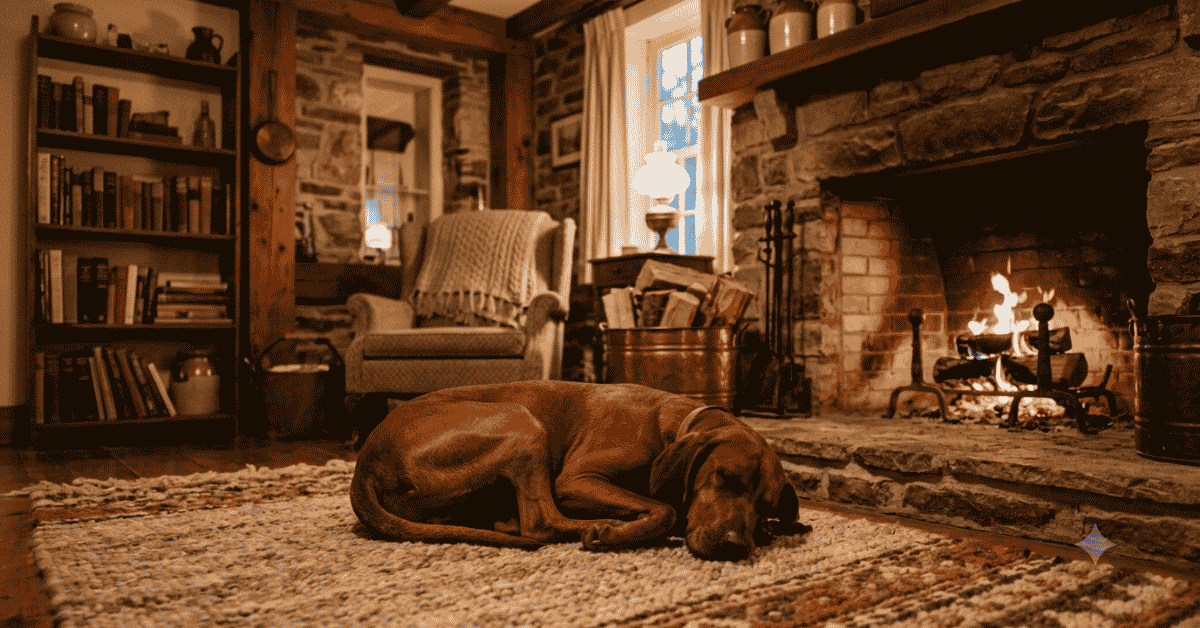
We hope the breeds of Coonhound will always be really attractive to you when we meet them. They never give in and are relentless, fierce, and ferocious while on a scent trail. But once inside the home, they become the most easy-going and laid-back couch potatoes on the planet.
Social and Pack Nature
Coonhounds were bred to hunt with people (and other dogs in packs), making them naturally social animals. They are usually very good with children, incredibly affectionate with family members, and do absolutely great with other dogs.
Requirements of Care, Exercise, and Living
Exercise & Mental Stimulation
Although Coonhounds are happy to lie around inside, they need their exercise outside to keep in shape. They need to expend working energy, so daily long walks and hiking or nose-work activities (like scent games) are a must.
Leash & Yard Safety
In a Coonhound, the nose governs the brain. The moment they catch an interesting scent, suddenly all recall commands go out the window in favor of following their instincts. That is why a tall fence and being tethered to a leash during walks become a non-negotiable thing.
Grooming and Hygiene Maintenance
Their coats are short and weather-resistant, meaning limited grooming needs—they only need to be occasionally brushed and washed. But their long ears need to be cleaned and checked regularly like other dogs to prevent moisture-induced infections.
Conclusion
From the steep, daunting mountain forests to coiling tightly on the living room rug, Coonhounds are one of a kind among North American dog breeds. Getting to know the Coonhound breed is an appreciation of a unique mixture of rugged athleticism, historical tradition, and loyalty that can only be described as family.
Passionate WordPress blogger sharing clear, helpful guides, simple tips, and practical ideas to help readers learn, grow, and succeed online.