Introduction
Exploring the Archaeological Evidence Behind Dog Domestication
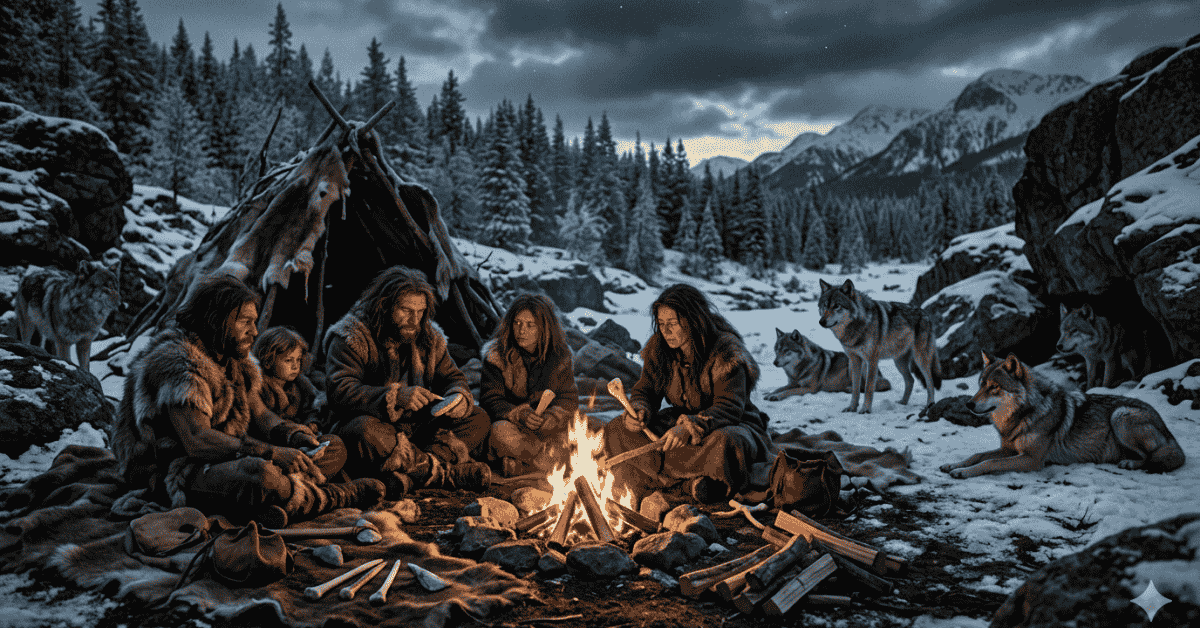
Dogs were the first species to develop an intimacy with people. Their story starts thousands of years ago when some ancient wolves roamed the same landscapes as early humans. Gradually, this relationship has deepened. Scientists study fossils, ancient bones, and DNA to understand how wolves gradually transformed into dogs. That gradual transition included alterations in behavior, appetite, and physical characteristics. The early humans had nearby alert and intelligent animals, and some wolves obtained food and safety. This mutual advantage probably created the bond that would alter both species forever. Understanding these origins helps illuminate how dogs became loyal companions and working partners in virtually every human society around the globe.
The Question of Self-Domestication
And one of the biggest debates in science today is: Did Dogs Domesticate Themselves? Or early wolves may have decided to remain near human camps instead of being caught and trained, some researchers believe. The most peaceful and least aggressive wolves may have had better odds of survival near humans. Over many generations, these wolves grew more comfortable around humans. This concept hypothesizes that early humans did not actively tame wolves. And instead, natural selection favored wolves that could coexist peacefully with people. This gradual process could have altered wolves into primitive dogs, outside direct human influence. The issue: Did Dogs Domesticate Themselves? Questions conventional wisdom and invites us to consider domestication as part of a collective experience rather than an act that humans impose on the beast.
Domestication of the Dog
Divergence from Wolves
They are distantly related to ancient wolves, in particular Ice Age wolves. These wolves, known as Pleistocene wolves, differed from their modern counterparts. Genetics suggests that dogs diverged from wolf ancestors as long ago as 15,000 to 40,000 years. Scientists disagree over where specifically this split occurred, with evidence suggesting East Asia and Siberia (or possibly even several different locales). Modern DNA research compares living populations of dogs and wolves, but ancient evidence from fossils offers more perspective on early populations. As generations passed, physical traits like shorter snouts, smaller teeth, and a range of coat colors emerged. Some researchers even propose a dual-ancestry hypothesis, suggesting that dogs may have descended from multiple wolf groups. This complex divergence informs the current debate regarding Did the Dogs Domesticated Him?
Theories Behind Dog Domestication
Commensal Pathway
The commensal pathway theory suggests that wolves came to human camps for leftover food. Regarding wolf domestication, an early theory called the human campfire theory suggests that as human settlements created waste piles, they attracted wolves. The calmest wolves benefited the most and reproduced their gentle traits. The other, called the migratory wolves theory, claims wolves followed humans during their migrations. Therefore, the food partitioning theory suggests that wolves hunted some of the same prey as humans but partitioned resources differently. And over the generations, wolves that were tolerant of humans tended to fare better. Such natural selection could have molded early dogs before humans began deliberately breeding them.
Genetic Changes
Genetic studies indicate that, compared to wolves, dogs evolved better ways of breaking down starch. Such dietary adaptation seems to indicate that dogs began to adapt to human food sources. Three years later, and slightly more than a decade after the Yellow Dog Study discovered the close association of certain coat colors with particular behavior traits. Epigenetics is also involved, so environmental factors can influence how genes are expressed. The genetic changes enabled dogs to thrive in human environments. Those findings are consistent with the conclusion that things happened naturally over time as wolves remained close to humans, reinforcing the idea behind “Did Dogs Domesticate Themselves?
Socialization and Co-evolution with Humans
Dogs evolved with us — and vice versa. This parallel evolution affected communication and social skills. “There is behavioral evidence that dogs are better than wolves at understanding human gestures. The wolves, scientists suggest, taught humans at least some of their cooperative hunting strategies. This connection had an echo of mutual influence, such that there developed a relationship between the two sides, growing stronger through generations.
Early Dogs and Their Domestication
The first real dogs likely came in the form of smaller, more social wolves that lived near human populations. Early evidence for domesticated dogs comes from fossil finds in East Asia and Siberia. Today’s Arctic breeds may still carry genetic markers from those early ancestors. Dogs served vital roles in hunting, guarding, and companionship. This enhanced hunting success benefited early humans in harsh climates.
Dog and Human Co-evolution
Co-evolution is when both species have an impact on the evolution of each other. Dogs, in return, had humans who gave them food and protection. The dogs found food, shelter, and protection. Wolves that connected with humans prospered through daily exposure. All this repeated contact could help us piece together how Did Dogs Domesticate Themselves? became a serious scientific question. The relationship developed organically, born of shared needs for survival.
Genetic Evidence of Dog Domestication
Genetics tells a more complicated story about dogs and wolves. Gradual splitting — not instant domestication — is hinted at by some data. DNA comparisons indicate persistent mixing of early dogs and wild wolves. These findings are consistent with theories that domestication was not a single act but rather a long process influenced by environment and behavior.
Behavioral and Morphological Changes
Alterations of behavior probably preceded morphological adaptations. Friendlier wolves had greater reproductive success closer to humans. Physical changes — floppy ears, curled tails, and colors in the coat that varied widely — emerged over time. These are common traits of domestication in many species.
Theories and Models
The self-domestication theory suggests that wolves chose themselves for life with humans. A well-known experiment by the Russian scientist Dmitry Belyaev revealed that if you select foxes for friendliness, they will quickly undergo physical and behavioral changes. Often dubbed the bonding hormone, oxytocin is also involved in building bonds between humans and dogs.
Dogs as a Hunting Technology
Dogs were also likely used by early humans to follow, chase, and retrieve prey. The switch to dogs made hunting easier and safer. Their senses helped detect danger. Such a collaboration would have improved survival rates and likely reinforced the interspecific bond.
Cultural and Geographical Propagation of Dogs
The dog traveled with humans as they migrated over continents. So, dogs adapted to other climates and needs. From Arctic sled dogs to the noble protectors of the desert, their variety mirrors human migration and settlement patterns.
Challenges to the Self-Domestication Theory
Other scientists contend that humans were more hands-on and bred wolf pups. They think selective breeding had a greater impact than natural self-selection. Such debates persist to this day as new archaeological and genetic data come to light.
The Evolutionary History of Modern Dogs
But modern dogs are extremely diverse in size, shape, and behavior. Thousands of years of selective breeding yielded specialized working and companion breeds. But their relationship to wolves is still evident in behavior and DNA.
Conclusion
What Does Dog Domestication Teach Us About Dogs and Humans?
The tale of dogs is one of a profound partnership between two clever species. With the aid of humans or through their own adjustment, dogs integrated into humans’ lives in distinct ways.
Some Final Thoughts on the Self-Domestication Hypothesis
The question: Did Dogs Domesticate Themselves? remains open. Evidence points to a combination of natural and human activities. What is certain is that this bond altered history forever.

Passionate WordPress blogger sharing clear, helpful guides, simple tips, and practical ideas to help readers learn, grow, and succeed online.