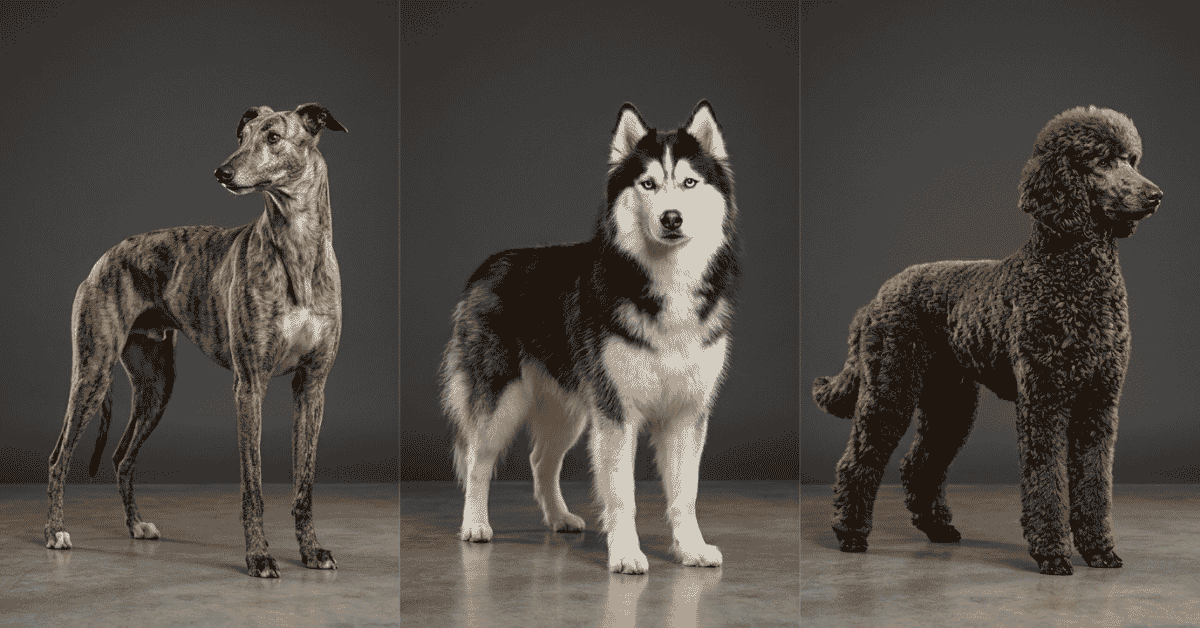
Dog breeds are truly a miracle; just think of the incredible range in canine coats, from super short haired with some shine like a Greyhound to a thick double coat akin to that on a Husky or wiry curls and tufted hair of Poodle. But have you ever stopped to consider what genes govern a dog’s underlining coat type?
Once we get beyond just looking: this leads us to ask what molecular limb, or genetic mechanism/blueprint accounts for a dog’s fur. Exploring some of the pioneering pieces of dog DNA discoveries— now fully characterizing what genes determine a dog coat type among all dogs out there, across the thousands of breeds we recognize today.
Core DNA Trio — The Roots of Canine Coats
The Breakthrough Study and NIH Discoveries
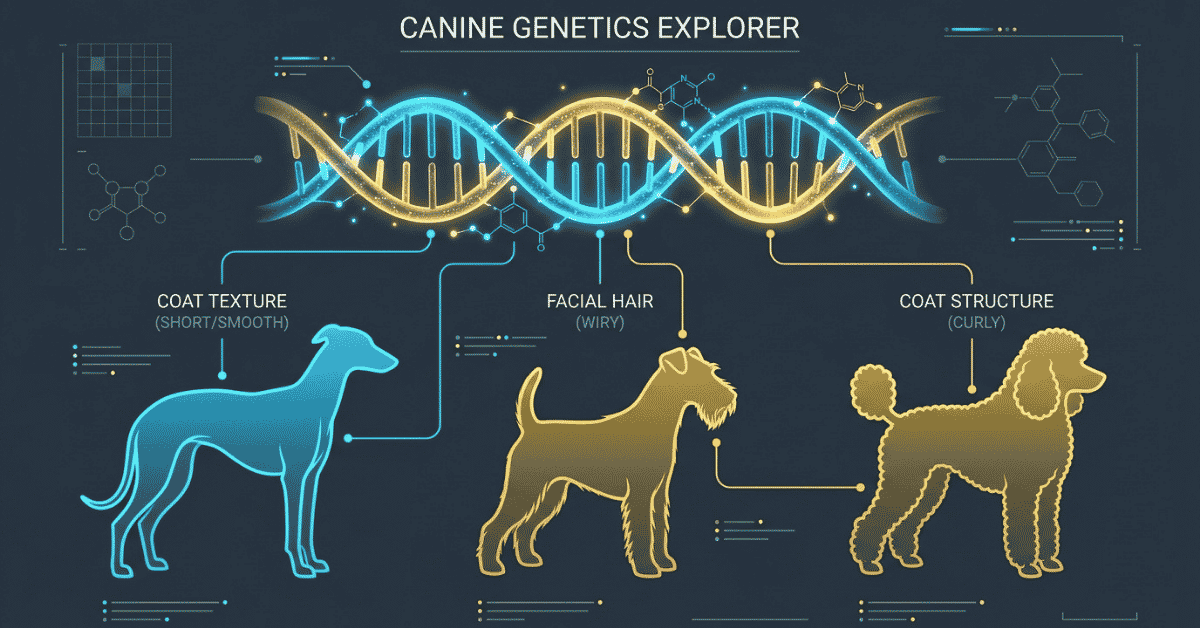
Canine geneticists had pondered for decades how so many unique breeds could arise from such vast mixtures of lineages. A breakthrough came in the form of large landmark study published by researchers from National Human Genome Research Institute (NHGRI). One was that the massive majority of variations in canine coats — longer, curlier, or hairless coats compared to wavy and shaggy furnishings falls down to three primary genes.
- Gene 1 – FGF5: This FGF5 gene primarily controls hair length in dogs. It is a biological switch that determines whether your dog has a short coat or wavy, long-haired mane. From a genetic perspective, the short-hair allele is dominant and as a result only one copy of the short-hair variation will confer upon an animal the phenotype of having short fur; long-haired dogs (those with long fur) carry two copies of the “long-hair” mutation, which is elsewhere classified as recessive.
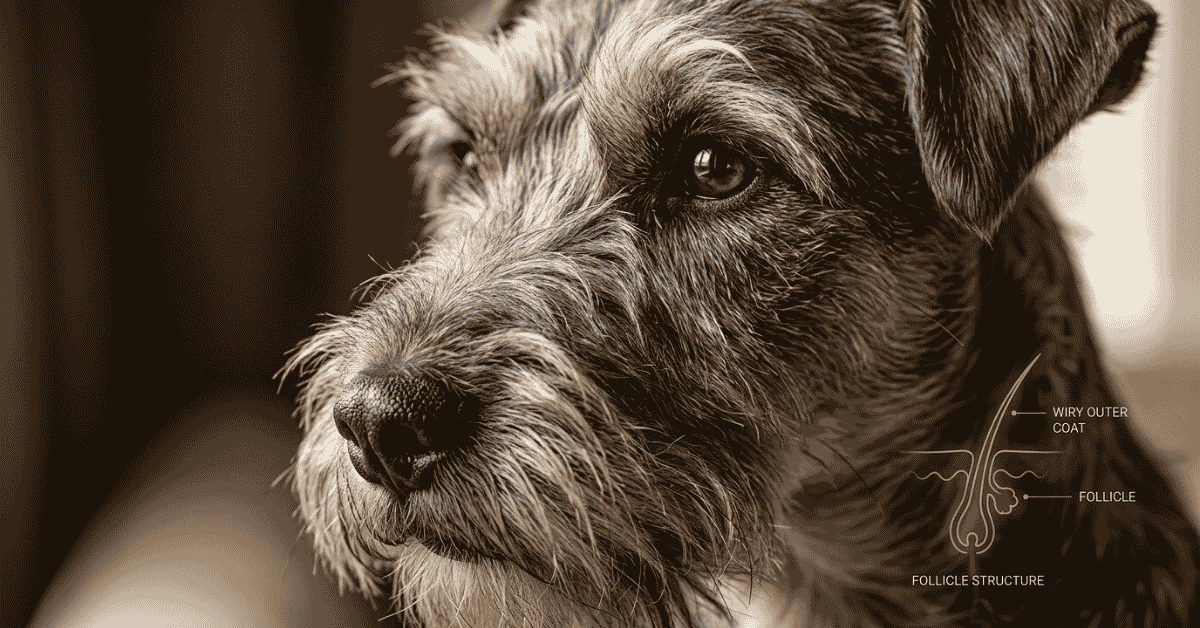
- Gene 2 – RSPO2 (R-Spondin 2): RSPO2 is related to features dog breeders refer as “furnishings”—which includes a clear beard, mustache, and bushy eyebrows, along with wire-haired textures. Mutations surrounding RSPO2, combined with those of other factors, change the patterns by which facial hair grows and give certain breeds their hallmark distinguished look.
- Gene 3 – KRT71 (Keratin 71): Keratin is the primary structural protein that composes hair. In particular, the KRT71 gene is an important regulator of coat texture. In fact, mutations in this single gene are responsible for curly hair vs straight displays and whether your dog has flatter or tighter ringlets of coat.
The Matrix of Dog Hair: Coat Variations Combine
To make sense of what genes determine a dog coat type, you have to consider the interplay among these basic genetic switches. No one gene operates in isolation but rather they work together like the ingredients of a recipe to create unique phenotypes.
Short vs. Long Coats The way that recessive and dominant alleles of the FGF5 gene relate to each other determines whether a dog’s hair follicles will keep growing hair forever (a long coat) or stop at some length (a short, low-maintenance coat).
Straight, Wavy, and Curly Textures Certain relationships between KRT71 and a modifier gene results in flat, wavy or tightly curled hair. Breeds such as the Poodle and Portuguese Water Dog also have certain variations of KRT71, which cause the hair shaft to spiral, leading to their distinctive hypoallergenic curls.
Furnishings and Wire Coats That’s really what breeders want to know when they ask why their dog is wiry for a wire-haired terrier or schnauzer: because RSPO2 (furnishings) together with FGF5 form an ironclad duo. This exact genetic mixture generates a hard, wiry overcoat that safeguards the skin against briars and also extreme weather condition.
INSULATION: SINGLE COAT VS DOUBLE COAT
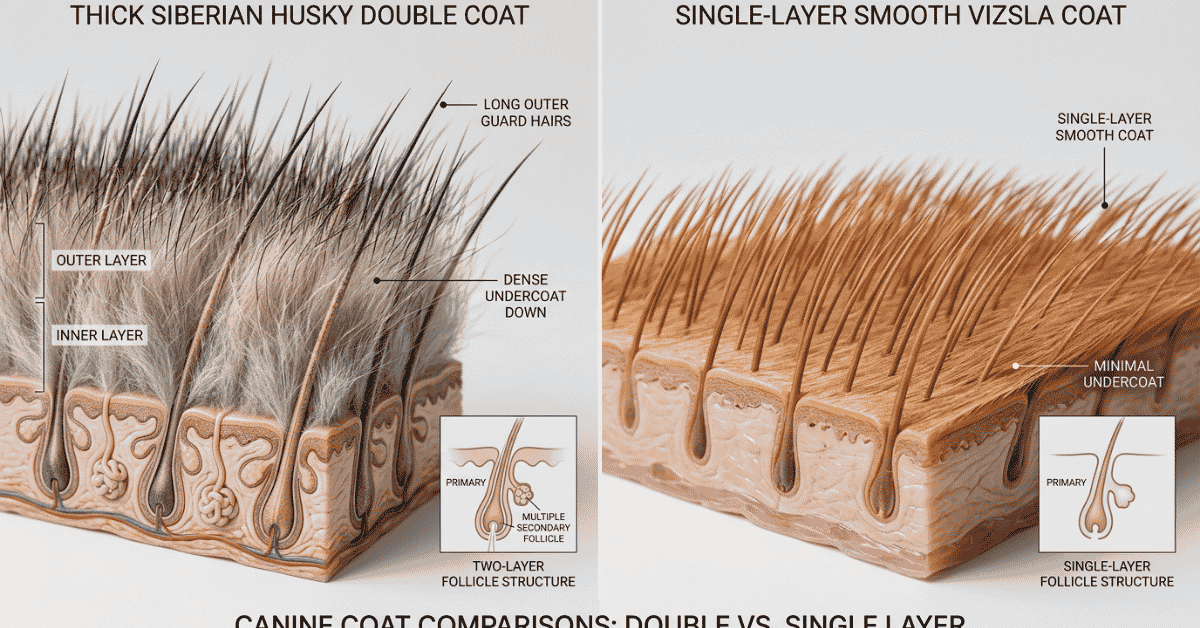
Aside from length and texture alone, dogs are divided into two primary groups that confer thermal protection overall:
The Double-Coat Genetics For double-coated breeds — Huskies, Malamutes, even German Shepherds — they have a very complex genetic program that creates a two-layered hairstyle: one layer of dense and insulating undercoat essentially designed to trap heat in the sub-zero winters; and poures safe but coarse weather-resistant outer guard hairs.
Single-Coat Mechanics Single-coated breeds do not have such a heavy undercoat. Their genetic makeup turns off the second hair growth cycle, allowing continuous hair growth in addition to minimal-shedding profiles like human hair.
Height and Texture: Other Genetic Factors
Hairlessness Mutations Even outside of ordinary fur, certain mutations produce hairless lines. A mutation here would cause the hairless features—e.g. in breeds such as the Xoloitzcuintli and the Chinese Crested—just goes to show that even a complete absence of fur is genetically programmed.
Shedding and Follicle Cycles If that were not enough, genetic coding also determines when hair follicles rest (telogen) and grow (anagen). Breeds that possess short, consistent cycles of shedding will drop hair all year round, while non-shedding breeds go through long growth phases where they don’t shed at all and require a regular trim as opposed to natural shedding.
Conclusion
The sheer number of incredible furbags around the world is a wonder of genetics. Examining the interactions between FGF5, RSPO2, and KRT71 provides a comprehensive biological explanation for what genes determine a dog’s coat type. An exquisitely evolved dog coat is a master class in genetic evolution, from climate adaptation to breed standards as we know them today.
Passionate WordPress blogger sharing clear, helpful guides, simple tips, and practical ideas to help readers learn, grow, and succeed online.